1. Start with household size—but don't stop there
Household size is a useful first filter. One person who mostly reheats leftovers has a very different requirement from a family that wants chicken and vegetables in the same cooking session. The mistake is treating household size as a capacity formula.
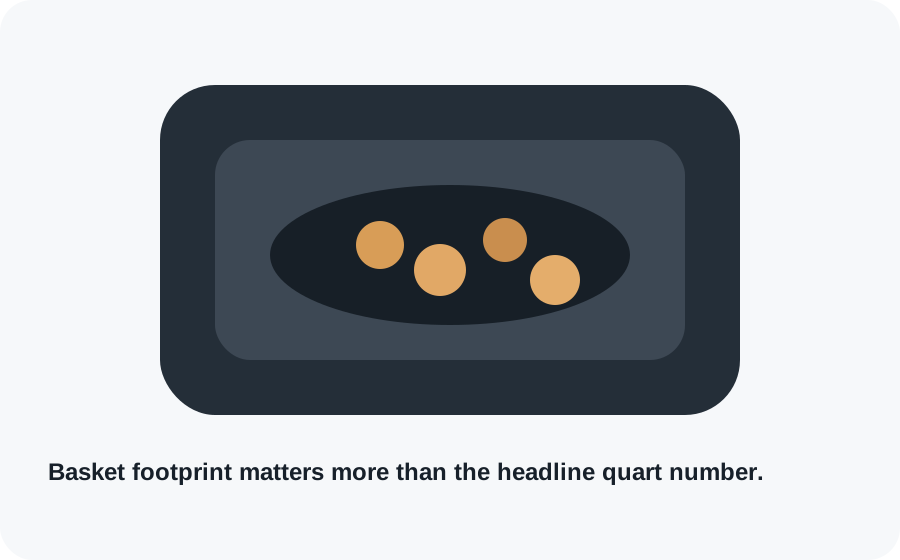
2. Basket footprint can matter more than volume
Air frying depends on hot air reaching the food. If the food is packed tightly, you may need to shake, flip, or cook in multiple rounds. That means a nominally larger basket is not necessarily equivalent to a larger usable cooking surface.
3. Think in meals, not quarts
Mostly snacks & reheating
Prioritize compact storage, quick controls and easy cleanup over maximum capacity.
Chicken + side
Look for enough usable surface area to keep the main food reasonably spread out.
Family batches
A larger basket can reduce repeat cycles, especially when the meal contains a lot of pieces.
Small kitchen
Measure counter depth and cabinet clearance before assuming a bigger fryer will fit.
4. Countertop dimensions are part of capacity
An appliance that technically fits but is awkward to move or store may be used less often. Check width, depth, height and the space required to pull the basket out safely.
5. The GlanceM decision framework
Write down your most common meal, the number of people eating, whether you want one batch or multiple cycles, and where the appliance will live. Then compare models against those constraints rather than starting with the highest advertised quart number.
FAQ
Is a 4-quart air fryer enough for two people?
It can be, especially for smaller meals. The more useful question is whether the basket gives you enough surface area for the foods you normally cook without crowding.
Is 6 quarts enough for a family?
It can cover many family meals, but meal composition matters. A basket may hold a lot by volume while still requiring multiple cycles for foods that cook best in one layer.
Should I buy the largest air fryer I can afford?
Not automatically. Larger units take more counter space and may be less convenient for small portions. Match size to your actual cooking pattern.
Sources & editorial note
GlanceM uses manufacturer specifications as the baseline for product facts and separates those facts from editorial interpretation. This guide is a decision framework, not a laboratory performance test.